Achieving a natural-looking crown is not simply a matter of selecting the correct shade. Even when a restoration is technically accurate, small differences in colour, translucency or surface texture can make it stand out against the surrounding teeth. This is particularly noticeable with anterior restorations, where matching a single crown to the adjacent natural teeth can be challenging.
Successful dental crown shade matching relies on accurate clinical information, good communication and the experience of the dental technician. Understanding how natural teeth interact with light, and how these characteristics can be reproduced in ceramic, helps us create restorations that blend naturally into the smile.
Understanding Natural Tooth Colour
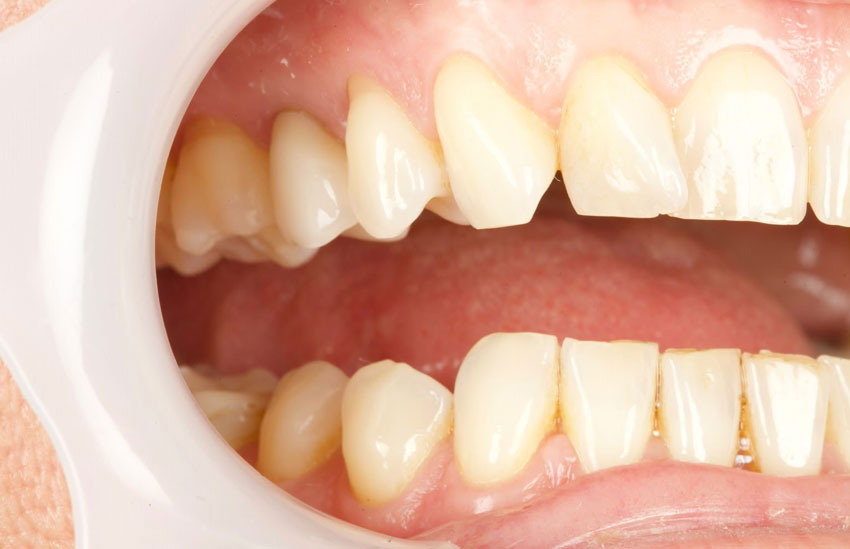
When matching a dental crown to the surrounding teeth, shade selection is only part of the process. Natural teeth are rarely uniform in colour, and their appearance is influenced by a combination of hue, chroma, value, translucency and surface characteristics.
Each of these elements contributes to the way a tooth reflects and transmits light. Two teeth may appear to have the same basic shade but look noticeably different because of variations in brightness, translucency or texture. The adjacent teeth provide the most useful reference. In anterior cases, the contralateral tooth can be particularly valuable, as it allows the technician to assess the shape, colour distribution and individual characteristics that need to be reproduced.
The technician therefore needs enough information to understand why the reference teeth look the way they do. Seeing that a tooth is a certain shade is useful, but understanding its individual characteristics provides a much clearer starting point for creating a crown that belongs alongside it.
| Factor | What it describes | Why it matters |
| Hue | The basic colour family | Determines whether the crown looks warmer, cooler, or more neutral |
| Chroma | Colour intensity | Helps match the strength of the natural tooth’s colour |
| Value | Lightness or darkness | Affects how noticeable the crown appears against neighbouring teeth |
| Translucency | How light passes through the restoration | Helps reproduce the depth and vitality of natural enamel |
| Surface texture | Fine ridges, grooves and other surface characteristics | Influences how light reflects from the crown and affects its perceived shade |
Dental Crown Shade Matching Beyond the Shade Guide
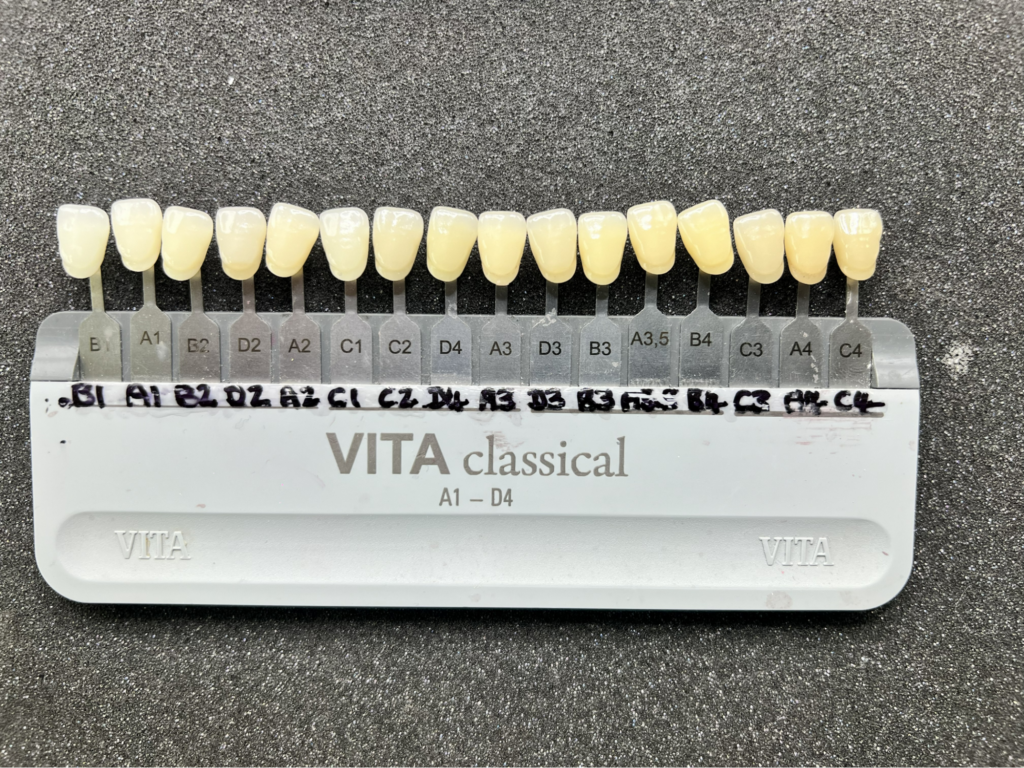
A dental shade guide provides a useful starting point, but achieving an accurate match requires a more detailed assessment of the natural teeth. Hue, chroma and value all contribute to the overall appearance, and differences in any one of these characteristics can make a crown stand out, even when the selected shade appears correct.
Value is particularly important. A crown that is slightly too light or too dark can stand out, even when the hue is very similar. It also helps to look at the tooth in thirds, as the cervical, middle and incisal areas can have quite different characteristics. Colour, brightness and translucency may all change as you move across the tooth.
Translucency is another part of what makes a natural tooth look natural. The thickness and structure of the enamel affect how light travels through the tooth and how it is reflected back. This is especially noticeable around the incisal edge, where differences in translucency can have a strong effect on the final appearance.
Surface texture also plays an important role in the final appearance. A highly polished surface reflects light differently from one with the fine ridges, grooves and irregularities found on a natural tooth. As a result, morphology and texture can change how the colour is perceived. Even when the underlying shade is right, getting these details wrong can make the crown look less convincing.
How Clinical Conditions Affect Shade Accuracy
The conditions in which shade information is recorded can have a significant effect on its accuracy. Lighting, surrounding colours and tooth hydration can all influence how a natural tooth appears, making consistency particularly important when assessing shade.
Different light sources can alter the perceived colour of a tooth or restoration. This can lead to metamerism, where two surfaces appear to match under one lighting condition but look different under another. Assessing shade under suitable, consistent lighting helps reduce these discrepancies and provides the laboratory with more reliable information.
Several factors within the clinical environment can influence shade assessment:
- Strong dental operating lights can alter colour perception
- Brightly coloured surroundings can reflect colour into the field of view
- Lipstick can introduce strong tones around the teeth
- Heavily coloured clothing can affect the surrounding visual field
- Dehydrated teeth can appear lighter than their natural shade
Timing is important too. Shade assessment is best carried out at an appropriate stage of the appointment, before the teeth have had time to become noticeably dehydrated. The surrounding teeth should also be assessed under the same conditions as the shade information is recorded, as this gives the technician a more consistent reference and reduces the chance of differences being caused by the assessment conditions rather than the teeth themselves.
Communicating Shade Information to the Dental Laboratory
Clear communication between the dentist and dental laboratory is essential when matching a crown to natural teeth. A written shade prescription provides the basic information, but clinical photographs can help the technician understand the finer details that are difficult to describe.
For anterior restorations, we find that a combination of full-smile photographs and close-up images of the adjacent teeth provides a much clearer picture of the case. These images help us assess colour distribution, translucency, surface texture and the relationship between the restoration and the surrounding dentition.
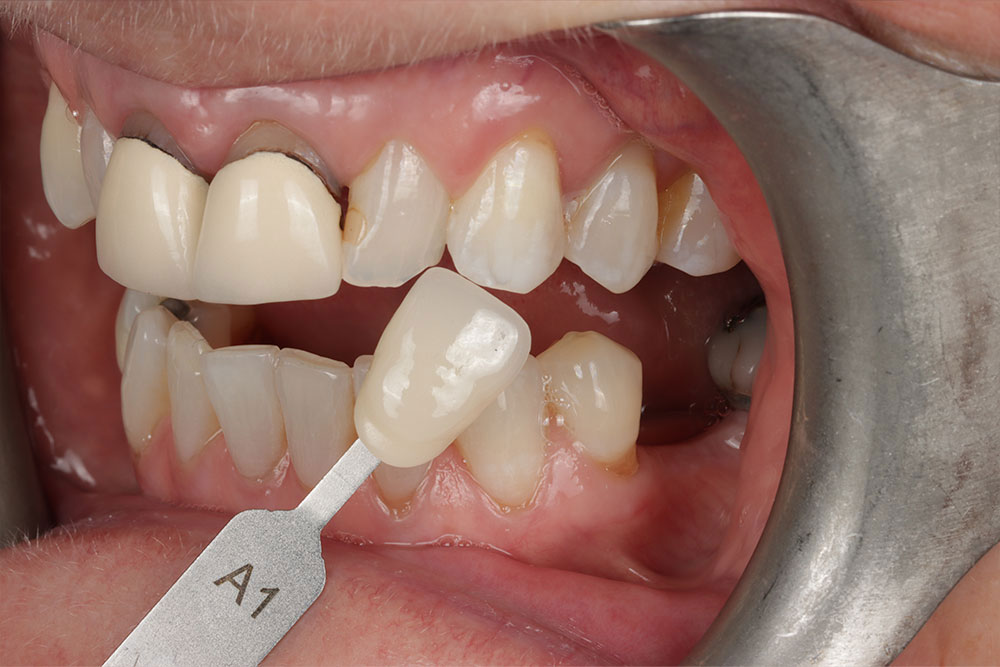
Including a shade tab in the photograph can give the technician a helpful reference, but it needs to be positioned carefully. Its placement, as well as the exposure and focus of the photograph, can affect how useful the comparison is, and it should support the clinical information rather than be treated as an exact colour reference.
Providing several photographs from different angles is generally more useful than relying on a single image. However, photography has its limitations. Lighting, camera settings, white balance and screen calibration can all affect colour reproduction, so photographs should always be considered alongside the clinical shade information.
For particularly challenging anterior cases, our professional dental shade-taking service can provide additional information to help achieve a closer aesthetic match.
The Dental Technician’s Role in Crown Shade Matching
Once the shade information reaches the dental laboratory, the technician must interpret it and determine how best to reproduce the characteristics of the natural teeth. This involves considering the selected restorative material, the available space, the underlying tooth structure and the aesthetic requirements of the case.
Different ceramic materials interact with light in different ways. Translucency, opacity and value can vary considerably, so material selection plays an important role in achieving the desired appearance. The technician must also consider how the thickness of the restoration and the underlying preparation may influence the final shade.
Depending on the material and the complexity of the case, ceramic layering, staining and glazing can be used to reproduce subtle colour variations and natural surface characteristics. These techniques allow us to introduce depth and individual character, rather than producing a restoration that looks uniform or artificial.
However, not every characteristic can be recreated through surface staining alone. Internal colour, translucency and the optical properties of the material all contribute to the final result. Understanding these limitations is an important part of selecting the most appropriate approach.
Good communication remains essential throughout the process. If the clinical information is incomplete or the shade presents particular challenges, discussing the case with the dentist before fabrication can help avoid unnecessary adjustments or remakes.
Ultimately, successful dental crown shade matching depends on combining accurate clinical records with appropriate materials and skilled laboratory techniques.
Creating Natural-Looking Crowns with GoDigital Dental
At GoDigital Dental, we understand that achieving a natural-looking crown involves much more than selecting the correct shade. Every case presents different challenges, particularly when matching a single anterior restoration to the surrounding natural teeth.
Our technicians combine digital workflows with traditional ceramic skills to create restorations that reflect the individual characteristics of each patient’s dentition. By working closely with dentists and making the most of the clinical information provided, we aim to achieve predictable aesthetic results while reducing the need for unnecessary adjustments.
Whether you require a straightforward posterior restoration or a more complex anterior case, our crown and bridge restoration services are designed to support your clinical requirements.
Contact GoDigital Dental to discuss your next case or find out more about our dental laboratory services.
FAQs
How should a shade tab be positioned in a photograph?
Position the shade tab close to the tooth being matched, ideally at a similar angle and on the same plane as the natural tooth. The tab should be clearly visible without obscuring the surrounding teeth, allowing the technician to compare colour, brightness and translucency.
Use consistent lighting and camera settings, avoiding strong shadows or reflections. For anterior restorations, photographs showing the shade tab alongside the adjacent teeth can provide valuable additional information. Taking images from several angles may also help capture surface characteristics and colour variations.
When is professional shade taking worth considering?
Professional shade taking can be particularly valuable for anterior restorations, single central incisors and cases involving complex natural tooth characteristics. It may also be useful when standard shade selection or clinical photography does not provide enough information to achieve a reliable match.
A professional shade-taking assessment can help identify subtle differences in hue, chroma, value and translucency, providing the dental laboratory with more detailed information to guide material selection and restoration design.
Can staining reproduce small colour variations in natural teeth?
Ceramic staining can reproduce subtle colour variations and surface characteristics, including small areas of warmth, white markings and other natural features. It is particularly useful for adding individual character and refining the appearance of a restoration.
However, staining alone cannot reproduce every optical characteristic of natural enamel and dentine. Internal colour, translucency and depth may require ceramic layering or careful material selection. The most appropriate technique depends on the restoration, the chosen material and the aesthetic requirements of the case.