When it comes to a dental restoration, material choice will shape how it performs once it leaves the dental lab. Some decisions are obvious from the prescription, but many come down to interpretation and experience, especially when more than one material could work.
Dental laboratories have to weigh up how a material will perform in the real world, not just how it looks on paper. What works well for a delicate front tooth may not be suitable for a heavily loaded back tooth, and the demands placed on an implant restoration can be different again.
With so many modern dental crown materials, as well as materials for other restorations, available, there’s more flexibility than ever, but also more decisions to get right. It comes down to experience, judgement and understanding how each option behaves in different clinical situations.
Understanding the role of material selection in dental laboratories
Choosing the right material is an important part of every restoration made in a dental laboratory. As well as strength and appearance, the choice needs to support how the restoration will function, how long it is expected to last, and the goals of the treatment.
No two cases are exactly the same. A restoration at the front of the mouth will likely have different requirements from one at the back, and every patient brings their own needs. The amount of space available, the way the teeth come together, and the type of restoration being made all help guide the material decisions.
By using the clinician’s prescription to guide the planning and manufacturing process, labs can produce restorations that support the planned treatment and fit comfortably next to the surrounding teeth.
Rather than following the same approach every time, labs look at the full picture before making a decision. By balancing function, long-term performance, and the clinical requirements of each case, the final restorations that are produced are well-suited to the individual patient.
Zirconia: strength, versatility, and evolving aesthetic capabilities
Zirconia has become a popular material in dental laboratories because it offers a good balance of strength and flexibility. It is widely used for crowns, bridges and implant restorations, especially when a restoration needs to handle everyday chewing forces while keeping its shape over time.
An important decision is whether to use monolithic or layered zirconia. Monolithic zirconia is made from a single piece, making it a strong choice for areas exposed to heavier biting forces, while layered zirconia combines a durable core with an outer ceramic layer, allowing technicians to create more natural colour and surface detail when appearance is more important.
Modern zirconia has also improved. Earlier versions were valued mainly for their strength, while newer high-translucency zirconia allows more light to pass through the material, giving it a more natural appearance. This has increased its use in more visible areas of the mouth.
By choosing the most suitable type of zirconia for each case, dental laboratories can achieve the right balance of strength, function and aesthetics, helping ensure the restoration meets both clinical and patient expectations.
Emax (Lithium Disilicate): the aesthetic standard for anterior teeth
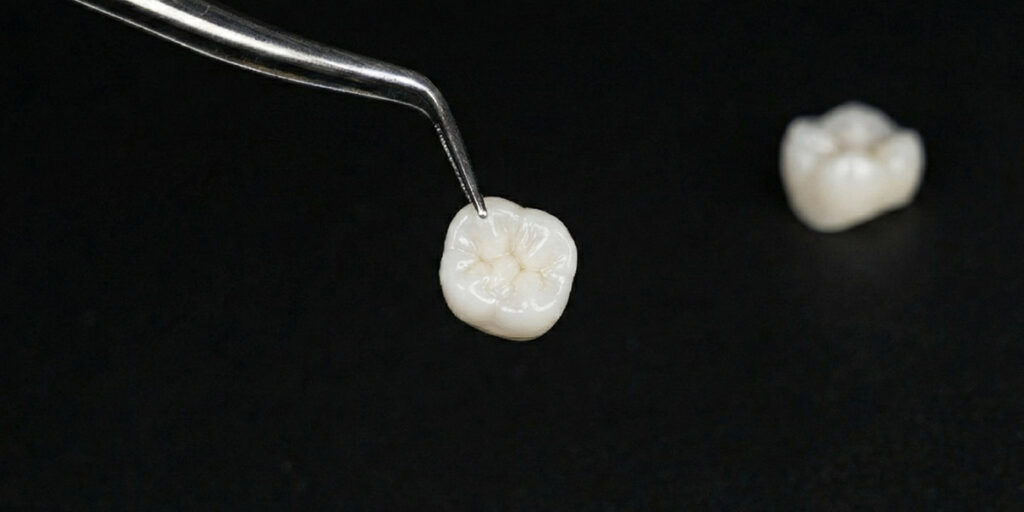
Emax is a ceramic material made from lithium disilicate and is widely used when achieving a natural appearance is important. It is often used for veneers and crowns on the front teeth, where even small differences in colour and translucency can have a noticeable impact on the final result.
One of the reasons Emax is so popular is the way it reflects and transmits light. This gives restorations a look that is very similar to natural enamel, helping them blend in with the surrounding teeth. For patients for whom aesthetics are a main priority, this makes Emax a strong choice.
While Emax is durable enough for many restorations, it is not always the best option for teeth that are exposed to the highest chewing forces. In some cases involving the back of the mouth, where durability under heavy load is the main concern rather than appearance, a different material may be recommended.
When considering zirconia vs Emax, the choice will ultimately depend on what the restoration ultimately needs to achieve. Emax is prized for its natural look, meaning it is a popular option for visible teeth where appearance is a key part of the success of the final result.
Layered ceramics: balancing beauty and function in complex cases
Ceramic still has an important place in modern dental laboratories, especially when it comes to creating restorations that need to look as natural as possible. Rather than using a single material, technicians carefully build up thin layers of porcelain over a strong substructure to create a restoration with natural depth, colour, and surface detail.
This layering process gives technicians the ability to recreate the small details that make each tooth look natural. By adjusting the shade, texture and translucency, they can produce highly realistic ceramic restorations that blend naturally with the surrounding teeth, especially in more visible areas of the mouth.
There is, however, a balance to consider. While the framework underneath provides strength and support, the outer porcelain layer is more delicate and may be more likely to chip than a restoration made from a single piece of material.
Even so, ceramic layering remains a trusted technique for complex cases. Although it takes more time and skill, it allows technicians to achieve a level of detail and realism that is difficult to match with other manufacturing methods.
Matching material to veneers, crowns, and implant restorations in practice
Every restoration is different, which is why dental labs do not rely on a single material for every case. Instead, technicians look at the clinical prescription as a whole and consider how the restoration will be used, where it will be placed, and what it needs to achieve over time.
When deciding which material is the best fit, laboratories will usually consider:
- The type of restoration: A veneer, a full crown, and an implant-supported restoration all place different demands on the finished restoration, so each case is assessed individually.
- Where the restoration will sit: Teeth at the front and back of the mouth have different functional and aesthetic requirements, which can influence the choice of material.
- The patient’s bite: The way the teeth meet, known as occlusion, helps determine how much pressure the restoration is likely to experience during everyday use.
- The desired appearance: Some cases call for the closest possible match to the surrounding teeth, while others place greater importance on durability.
- The clinician’s prescription: The instructions provided by the dentist guide the laboratory throughout the design and manufacturing process, helping ensure the restoration meets the planned treatment goals.
- Long-term performance: The chosen material should be suitable not only for the day it is fitted, but also for how the restoration is expected to perform over the years.
By bringing all of these factors together, dental laboratories can make informed decisions that support both the clinical requirements of the case and the needs of the patient.
| Restoration type | Main considerations |
| Veneers | Natural appearance, translucency, conservation design |
| Anterior crowns | Aesthetic match, shape, shade and surface detail |
| Posterior crowns | Strength, durability, and resistance to chewing forces |
| Implants | Stability, function, and long-term performance |
| Full-mouth rehabilitation | Consistency, planning, and balancing multiple restorations |
Turning material choice into predictable outcomes
The best restorations start with the right decisions, and material selection is an important part of this. When the prescription, lab expertise, and manufacturing process come together, the result is a restoration that is designed to meet the needs of both the clinician and the patient.
At GoDigital Dental, we carefully assess every case before recommending the most suitable approach. By combining technical expertise with digital manufacturing and skilled craftsmanship, we produce restorations that are tailored to each prescription.
Whatever the restoration, our aim is always the same: to provide high-quality results that clinicians can fit with confidence and patients can rely on for years to come.
FAQs
Do technicians need special training in ceramics?
Technicians need specific training to work with ceramics because the materials require careful handling and detailed knowledge of their properties. This training helps them understand how ceramics behave during the production process and how to achieve the required shape, colour and finish for each restoration. It also develops the skills needed to create accurate and natural-looking results.
Furthermore, ongoing learning is important as techniques and materials continue to develop within modern dentistry. Technicians build their knowledge through experience, education and practical training to maintain high standards when working with ceramic restorations in the laboratory environment and meet patients’ and clinicians’ expectations.
Can dentists have a say in what material they think will be best?
Dentists play an important role in the material selection process by sharing their thoughts, preferences and the goals they have for each case. Good communication between the dentist and laboratory helps ensure everyone understands what the restoration needs to achieve. It also allows any concerns or challenges to be discussed early in the process.
While the dentist’s input is always valued, the laboratory may sometimes suggest a different approach based on their experience and technical knowledge. If they feel another option would better suit the case, they can guide the decision to help achieve the best possible outcome for the patient.
What helps make a restoration last longer?
A restoration can last longer when the right material is chosen, the design is carefully planned and it is made accurately. The way it fits and works with the surrounding teeth is important, as this helps it cope with everyday use. Clear communication between the dentist and laboratory also helps.
Looking after the restoration and maintaining good oral health can also help it perform well over time. Things such as bite pressure, regular check-ups and following advice from the dental team can all make a difference. Choosing a solution that suits the individual case helps support long-term function and durability.