Most patients want veneers that look natural. They want a smile that feels fresh, confident, and healthy without looking obviously “done”. Oversized or bulky veneers can quickly affect the overall appearance of the smile and even the patient’s confidence in the result.
People are becoming far more aware of cosmetic dentistry, especially through social media and close-up photography. Patients can often tell when veneers look too heavy or unnatural, even if they cannot explain exactly why. Instead of enhancing the smile, bulky veneers can end up distracting from it.
The best veneer work rarely stands out. Instead, it fits the person naturally, works with their facial features, and feels comfortable. Achieving that kind of result relies on careful thinking and planning long before the final veneers are fitted.
Under preparation
One of the main reasons veneers can look bulky is simply not creating enough space for them before treatment starts. Veneers need room to be able to sit naturally on the teeth. If too little enamel is removed, they often end up sitting slightly further out than ideal, which can make the smile look thicker or less natural.
Minimal-prep and no-prep veneers can work very well in the right cases, but they are not suitable for everyone. When they are used on teeth that are already prominent or crowded, the lack of space can lead to over-contoured results. Patients may then feel that their teeth look too large or more noticeable than expected.
| Types of veneers | Facial reduction | Incisal reduction | Margin style | Best suited for |
| Ultra-Thin | 0.1-0.3mm | 0.0-1.0mm | Feather edge/none | Small gaps, slight lengthening, instantly whiter teeth |
| Porcelain | 0.3-0.5mm | 1.0-1.5mm | Light Chamfer | Where aesthetics are a top priority, mild teeth crowding |
| Lithium Disilicate | 0.5-0.6mm | 1.5-2.0mm | Distinct Chamfer | Moderate crowding, dark teeth, heavy bite forces |
| Zirconia | 0.5-0.8mm | 1.0-1.5mm | Rounded Shoulder/ Chamfer | Where discoloured stumps need extreme masking, covering damage caused by bruxism |
The main aim is to balance saving tooth structure and create enough space for the ceramic to be shaped well, as without this balance, it is hard to achieve smooth, natural-looking contours. Signs of not enough preparation often appear around the gumline and in the side view, where the teeth can look bulky or slightly push the lip forward, showing how important careful planning is from the start.
Material choice and veneer thickness
The material used for veneers affects how natural they look and how thick they need to be, as they differ in strength, transparency, and minimum veneer thickness. Some can be made very thin without losing their strength, while others need to be a little more substantial in order to get the benefit of their properties. There is no single best choice, so the option must suit both function and appearance. Common veneer materials include:
- Feldspathic porcelain – Often used for highly aesthetic cases due to its natural translucency. It can be made very thin, but it is less strong than newer ceramics.
- Lithium disilicate – A popular all-round material that combines strength and good aesthetics. It allows relatively thin veneers while still being durable.
- Zirconia-based ceramics – Very strong and suitable for patients with heavy bite forces or grinding. However, it is less translucent and must be carefully designed to avoid a bulky look.
- Composite veneers – A resin-based option that usually requires less preparation. It is more conservative but less durable and more prone to staining.
The colour of the tooth underneath the veneer is also important, because dark or heavily stained teeth can still show through thin ceramics. In these situations, dentists may need to choose more opaque materials or slightly increase thickness to improve coverage. The difficulty is avoiding a result that looks flat or too bulky, since too much opacity or thickness can make veneers look heavy, particularly near the gumline.
When the best material for patients’ needs is used, their veneers are more likely to look natural and well-balanced. Modern ceramics can achieve thinner and more natural results than before, but careful planning is still essential, and the dentist needs to think about bite, alignment, and cosmetic aims before selecting a material. Teeth that are well aligned and light in shade usually work well with thinner veneers, while darker or more complex cases often need extra support.
Emergence profile and tooth position
The emergence profile refers to the way a tooth or veneer comes out from the gumline and transitions into the visible part of the tooth. When this transition is smooth and well-shaped, the tooth looks like it naturally belongs in the mouth, but if it is too steep or too full near the gumline, the tooth can look unnatural even if the colour and size are correct.
When the contour near the gumline is not well controlled, the area can appear swollen or “puffy”. This often happens when the veneer is too thick in the wrong place or when the shape does not follow the natural line of the gum. Even small changes in this area can have a big impact on how natural the smile looks.
Tooth position also plays a major role in the final result, as teeth that are crowded, rotated, or pushed forward may not be ideal for placing veneers. In some cases, orthodontic treatment like braces or clear aligners is needed to create a better foundation before cosmetic work is carried out. Without this step, the final result can look forced or uneven.
Veneers have limits when it comes to correcting poor alignment or positioning. They can improve shape, colour, and minor spacing issues, but they cannot fully replace proper tooth movement. The overall veneer prep design also needs to take into account facial profile, lip support, and how the smile changes when speaking or smiling, as all of these factors influence how natural the veneers will look in everyday life.
Communication failures
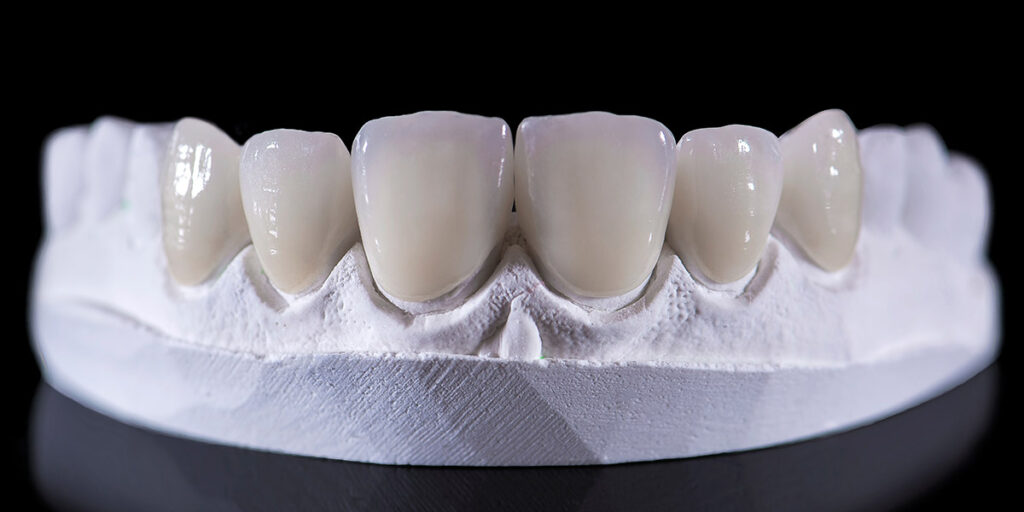
Good communication with the dental laboratory is often what separates natural-looking veneers from ones that feel slightly “off”. When instructions are unclear or important details are not shared, the technician has to make assumptions. This can easily lead to veneers that do not quite match the patient’s smile in shape, contour, or how they sit against the gums.
Having the right records makes a real difference to the end result. Smile design notes, facial photographs, and accurate bite records help the technician see the full picture, not just the teeth in isolation. Without this context, it becomes much harder to judge how the veneers should look in relation to the face or how they will behave when the patient speaks or smiles.
It also helps when there is a clear discussion about finer details before anything is made, such as the contour of the teeth, the surface texture, and where the edges should sit. These small design choices have a big impact on how natural the veneers look day-to-day. The most successful cases usually come from proper collaboration between the dentist and our technicians at GoDigital Dental, rather than relying on guesswork at any stage.
How digital smile planning and wax-ups help prevent bulky veneers
Digital smile planning helps take a lot of the guesswork out of veneer treatment. It offers up a clear visual idea of how the teeth could look before anything is actually done in the mouth, making it easier to plan proportions and thickness properly, so the final result suits the face rather than simply adding material onto existing teeth.
Wax-ups then enhance smile design by creating a physical model of the planned result. They’re particularly useful because they can often highlight early on if certain areas look too full or unbalanced, so they can then be adjusted before treatment begins. Mock-ups or trial smiles also give the patient a chance to see and feel a preview, helping to check comfort, appearance, and how the teeth work in real life.
3D scans add another layer of accuracy by guiding how much preparation is actually needed to help create just enough space for the veneers without removing too much enamel. When everything is planned properly from the start, the final veneers are usually slimmer, more natural, and much more predictable in the mouth.
Plan and prepare patients’ veneers with precision
Achieving natural-looking veneers depends on careful decision-making at every stage, from early assessment through to final fit. When each step is considered as part of a wider plan, the final result is more likely to sit comfortably within the smile and feel right for the patient in everyday life.
Attention to detail, clear communication, and structured planning all help reduce uncertainty during treatment. This allows both clinical and laboratory teams to work with a shared understanding of the intended outcome, which supports more consistent and refined results.
Ultimately, precision in cosmetic veneer planning and preparation helps create veneers that are well integrated, stable in appearance, and better aligned with patient expectations over time.
FAQs
Can bulky veneers be corrected after they are fitted?
Bulky veneers can sometimes be improved after they are fitted, depending on how much extra material is present and how the bite is affected. Small adjustments may be possible by carefully reshaping the surface or refining the edges to create a slimmer appearance. In other cases, changes are limited.
If the veneers are too thick or over-contoured, having them fully replaced may be the best option, as this allows the dentist to correct the shape, thickness, and fit more accurately. Careful reassessment is important to understand why the result occurred, so future veneers can be planned with better space and improved design from the start.
How long does digital smile planning usually take?
Digital smile planning usually takes a few days to a couple of weeks, depending on the complexity of the case and the amount of information available at the start. Simple cases with good photographs and scans can be planned more quickly, while more detailed cases may take longer.
The process includes reviewing photos, scans, and bite records, then creating a digital design that shows how the teeth could look, which is often refined through feedback from the dentist and patient, plus adjustments, before being finalised. Once agreed, it helps guide the next stages of treatment planning and communication with the dental laboratory.
What should I expect during a veneers consultation?
A veneers consultation usually begins with a discussion about your goals, concerns, and what you would like to change about your smile. The dentist will examine your teeth, gums, and bite to check if veneers are suitable. Photographs and scans may also be taken to help with planning.
You may also be able to have a look at examples of possible results using digital planning or models. The dentist will explain treatment options, materials, and what preparation may be needed, and you can also ask questions about appearance, comfort, and durability. By the end, you should have a clear idea of the process and next steps.