A career as a dental lab technician offers a unique combination of scientific knowledge, artistic ability, and technical skill. Dental technicians work in various settings, including commercial dental laboratories, community dental services, and private sector practices within dentistry.
Whether you are a trainee dental technician or a self-employed dental technician with your own laboratory, knowing the essential skills you need can be the difference between a capable technician and a valued professional.
Here are the top skills that every dental lab technician needs to succeed, from manual dexterity to communication skills, and how these abilities contribute to patient care, oral health, and the success of dental teams.
Education and training
Entry requirements and initial qualifications
Becoming a dental technician usually begins with completing a GDC-approved qualification, such as a diploma in dental technology or a foundation degree in dental technology. Entry requirements can vary depending on the course and institution, but include a science subject at A-level or a grade C in related subjects. Some dental schools and colleges also consider candidates’ performance in a manual dexterity test to assess practical potential.
Trainee dental technicians can also benefit from online learning courses and hands-on training to develop the essential technical skills needed for producing dental appliances and dental prosthetics. Successful completion of these programmes is often required for professional registration and GDC registration, and is likely to be mentioned when you go through the application process for a dental technician role.
Progression and specialised training
After initial qualifications, dental technicians can pursue degree courses such as BSc Hons in dental technology or further training in specialised areas like maxillofacial prosthetics, orthodontics to help straighten teeth or reconstructive sciences. Professional development is crucial for dental technicians’ work, particularly for clinical dental technicians or those aiming to work with dental hospitals and community dental services.
Specialist technicians may also undertake training to operate advanced computer-aided design and digital equipment, improving their ability to fine-tune dental devices for individual patients. Continuous training ensures dental technologists maintain high standards, work closely with dentists and wider healthcare teams, and deliver exceptional patient care.
Precision and attention to detail
Importance of accuracy in dental prosthetics
Accuracy is vital in dental laboratory work because even small mistakes can affect a patient’s comfort, oral health, and how well dental appliances work. Dental prosthetics, including crowns, bridges, and both full and partial dentures, must fit well to restore patients’ natural teeth properly.
Commercial laboratories often work under strict quality control procedures to make sure each product meets clinical standards, and dental technicians work closely with dentists so every piece suits individual patients.
Attention to detail also affects professional development, as dental technicians who produce accurate work are more likely to gain recognition from the General Dental Council (GDC) and move forward in their careers.
Whether working on maxillofacial prosthetics or dental braces, technicians need to meticulously review measurements, moulds, and casts to maintain high standards and protect the patient’s general dental welfare.
Minimising errors in laboratory work
Reducing errors needs a mix of technical skill and organised working practices. Dental technicians must follow laboratory protocols carefully, record their work clearly, and double-check every step. In commercial dental laboratories, following quality control guidelines is essential to meet regulatory requirements and properly support patient care.
For trainee dental technicians, learning to fine-tune their techniques early on is essential, as mistakes in dental devices or prosthetics can have serious consequences for both patients and dentists.
Manual dexterity and hand-eye coordination
Handling small instruments with confidence
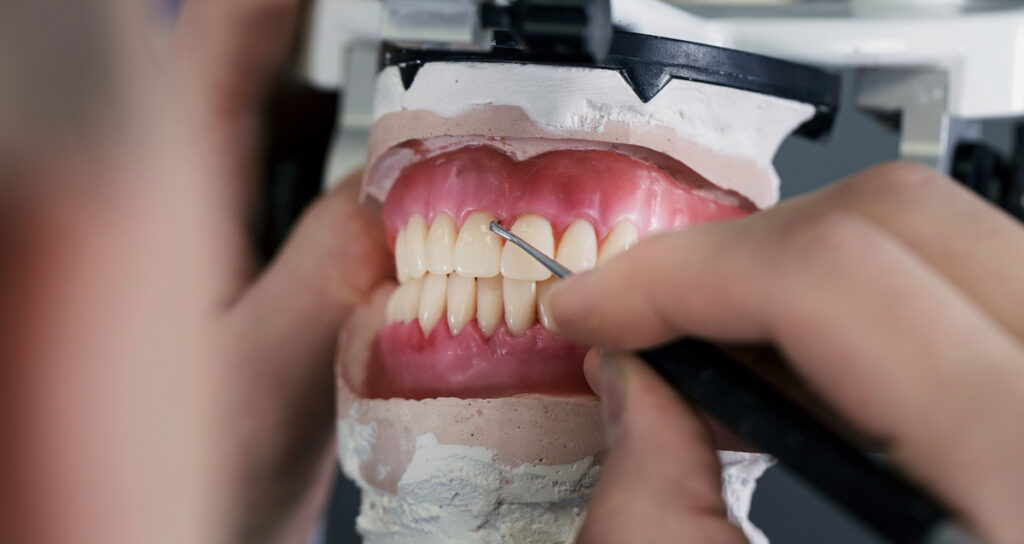
A dental technician’s ability to use small instruments is essential for making dental appliances that feel comfortable and work properly. Manual dexterity is especially important when creating detailed maxillofacial appliances, dental braces, or specialised dental devices.
Hands-on experience gained during training at dental schools or through work placements in dental hospitals helps dental technicians develop this skill under supervision.
Many training programmes include a manual dexterity test to assess candidates’ potential before they start more advanced tasks. Those with strong hand-eye coordination can more easily shape and assemble prosthetics, ensuring the final product meets both functional and aesthetic standards.
Fine motor skills for complex procedures
Maintaining focus and building control over fine motor skills remains essential. Skilled hand movements are vital for precise work, such as modifying dental prosthetics, shaping crowns, or performing delicate repairs on dental devices.
Steady hands and careful movements are particularly useful for specialist technicians who work on, for example, maxillofacial prosthetics or within reconstructive sciences, as dental laboratory work often involves long periods of detailed craftsmanship.
Even self-employed dental technicians managing their own laboratory gain from excellent manual dexterity, as it enables them to work effectively and provide high-quality results to individual patients without direct supervision.
Knowledge of dental materials
Understanding various types of dental alloys and ceramics
Dental technology needs a strong understanding of the materials used in dental prosthetics and devices. Dental technicians must know how different metals, ceramics, and polymers behave under heat, pressure, or when being moulded. This knowledge makes sure that crowns, bridges, dentures, and maxillofacial appliances are long-lasting, safe, and comfortable for patients.
Most dental technicians working in commercial laboratories or dental practices will encounter a range of materials. Specialist areas, such as maxillofacial appliances or dental braces, require additional understanding of material properties to meet patients’ functional and aesthetic needs.
Selecting the right material for each case
Choosing the right material is not only a technical choice but also an important part of patient care. For example, a clinical dental technician must think about the patient’s oral health, allergies, and preferences when suggesting dental appliances.
By choosing the correct material, dental technicians help improve patients’ appearance, restore function, and keep long-term oral health. Dental laboratories often give advice, but individual employers and self-employed dental technicians need to use their judgment to get the best results for each patient.
Technical and digital proficiency
Operating CAD/CAM systems
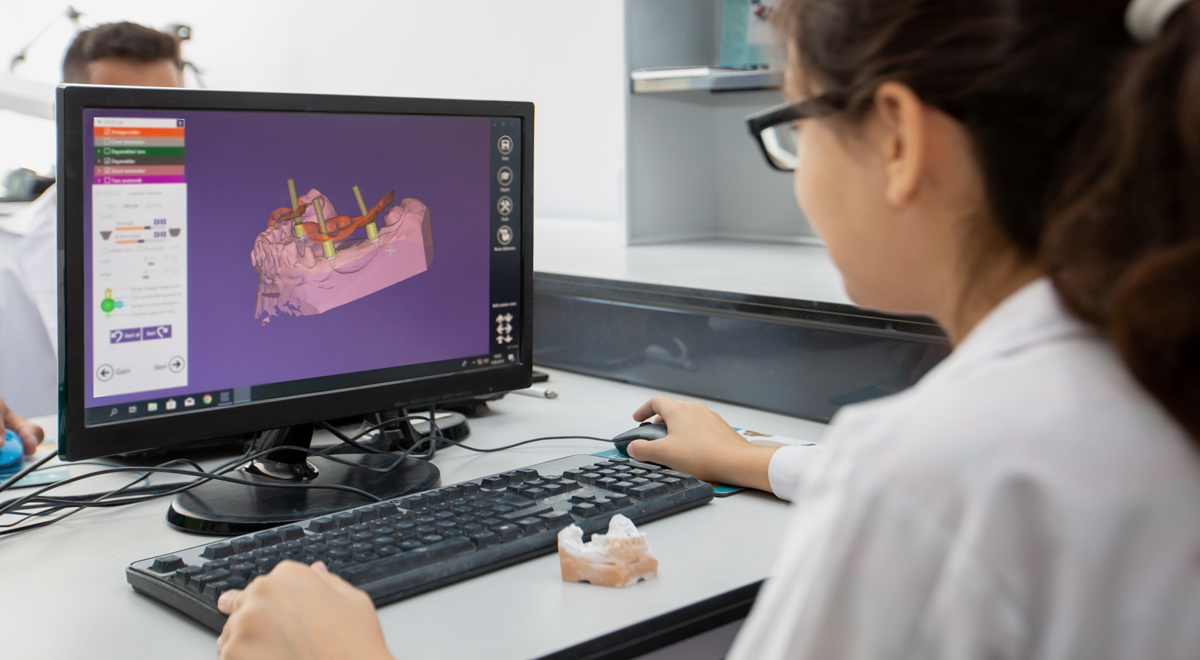
Computer-aided design (CAD) and computer-aided manufacturing (CAM) are becoming more important in modern dental technology. Dental technicians use these systems to create crowns, bridges, and other dental devices accurately and efficiently. Being skilled in CAD/CAM software lets dental technicians make complex prosthetics that are hard to do by hand, cutting down on mistakes and production time.
Digital skills are also important for dental technicians seeking professional registration or pursuing further training through online learning or degree courses such as BSc Hons or foundation degree programmes in dental technology.
Using 3D printing and other dental technology
Dental laboratories now have specialised equipment like 3D scanners and printers. Dental technicians use these tools to copy natural teeth, make dental braces, and produce maxillofacial appliances accurately. Knowing how to use and care for these devices is important for both commercial laboratories and private sector work, where speed and accuracy are highly valued.
Technical skill in digital technology complements traditional hands-on expertise, allowing dental teams to work closely with dentists and clinical dental professionals to improve patient care.
Problem-solving skills
Identifying and correcting design flaws
Dental technicians often face problems that need creative problem-solving. A dental prosthetic might not fit properly, or a dental appliance may need changes to suit the patient’s needs. Specialist technicians working in dental hospitals or community dental services must be able to solve these issues quickly, making sure the patient’s general dental welfare is always prioritised.
Developing reasoning skills and the ability to fine-tune techniques allows dental technicians to overcome unexpected problems. Trainee dental technicians gain experience in these situations during placements or hands-on training sessions, helping them build confidence in their professional abilities.
Adapting to challenging patient cases
Every patient presents a unique set of challenges. Successful dental technicians have the skills to adapt their work to meet variations in oral health, anatomy, and patients’ individual requests and requirements. This is especially important for those working with maxillofacial appliances or reconstructive sciences, where precision and patient-specific customisation are crucial.
Dental technicians who can adapt quickly are better positioned to provide high-quality dental devices that enhance both function and appearance.
Time management and organisational skills
Prioritising workload efficiently
Dental laboratory work often means handling several cases at the same time. Good time management makes sure dental devices are finished on schedule without lowering quality. Commercial laboratories and dental practices depend on dental technicians to meet deadlines, especially when dealing with urgent cases in dental hospitals or community dental services.
Organisational skills also help dental technicians track progress, maintain records, and comply with quality control standards. Trainee dental technicians benefit from structured training programmes that teach them how to prioritise tasks and manage their workflow efficiently.
Maintaining a streamlined laboratory workflow
Maintaining a streamlined workflow is critical in both commercial and private sector settings. Dental technicians work closely with dentists, clinical dental professionals, and wider healthcare teams to coordinate production schedules, plan treatments, and ensure smooth operations.
An organised laboratory reduces errors, increases productivity, and enhances patient care, reinforcing the importance of professional development and adherence to standards set by the General Dental Council.
Communication and teamwork
Collaborating effectively with dentists and fellow clinical dental technicians
Dental technicians must communicate effectively with dentists, clinical dental technicians, and dental teams to ensure that patient care is seamless.
Clear communication helps prevent misunderstandings, improves treatment results, and makes sure dental prosthetics, braces, and other devices meet clinical requirements. In a commercial dental laboratory, teamwork is very important, as technicians often handle different stages of the same project.
Direct contact with patients is less common for laboratory-based dental technicians, but those in clinical dental roles or community dental services may deal with patients directly. Good interpersonal skills are important for explaining technical details, discussing material choices, and handling patient concerns.
Explaining technical details clearly when needed
Dental technicians must also be able to explain complex procedures in a way that non-specialists can understand. This skill is vital when providing information to dentists, clinical dental technicians, or patients receiving maxillofacial appliances or other specialised dental devices. Effective communication ensures that everyone involved in patient care understands the process, timelines, and expectations.
For self-employed dental technicians and those working in private sector practices, the ability to communicate effectively also contributes to building a professional reputation, gaining repeat clients, and maintaining strong working relationships within the wider healthcare team.
GoDigital Dental: expert technicians for your dental practice
At GoDigital Dental, we know that successful dental treatment relies on precision, skill, and seamless collaboration. Our GDC-registered dental technicians combine advanced digital workflows with proven craftsmanship to support modern dental practices. Using technologies such as CAD/CAM and 3D printing, we produce high-quality dental appliances and restorations that are accurate, consistent, and tailored to individual patients.
We work closely with dentists and dental teams to deliver dependable results that support excellent patient care. From everyday restorative work to complex cases, our focus is on reliability, communication, and technical excellence.
Partnering with GoDigital Dental means choosing a laboratory that understands your practice, your patients, and the future of digital dentistry.
FAQs
Which tools and equipment should every dental technician master?
Every dental technician should master a range of essential tools and equipment to work effectively. This includes hand instruments such as scalers, spatulas, and carving tools, which are used for shaping and adjusting dental prosthetics. Understanding the use of moulding equipment, casting machines, and articulators is also important for producing accurate dental appliances and maxillofacial devices.
Technicians should also be skilled in digital tools, including CAD/CAM software, 3D scanners, and 3D printers, as these are increasingly central to modern dental technology. Knowing how to operate, maintain, and troubleshoot both manual and digital equipment is vital for consistent, high-quality results.
Why is it important for a technician to have knowledge of dental anatomy?
Knowledge of dental anatomy is important for a technician because it ensures that dental prosthetics, braces, and other appliances fit correctly and function properly. Understanding the shape, size, and position of teeth helps technicians replicate natural teeth accurately, improving patient comfort and oral health.
It also allows technicians to work closely with dentists and clinical dental teams to meet individual patient needs. When creating maxillofacial appliances or reconstructive devices, knowing dental anatomy ensures precise customisation. This knowledge supports the production of durable, effective dental devices, reduces errors, and helps technicians maintain high standards in both commercial laboratories and clinical dental settings.
What teamwork skills are valuable when working in a dental lab or clinic?
Valuable teamwork skills in a dental lab or clinic include clear communication, reliability, and the ability to follow instructions accurately. Dental technicians must share information about cases, updates, and potential issues with colleagues and dentists to ensure dental prosthetics, braces, and other devices are made correctly and on time.
Working well with others and showing respect are essential, as dental technicians frequently handle separate stages of a single project. Helping team members, acknowledging feedback, and being flexible with changing tasks keep the workflow smooth and efficient. These abilities ensure consistent, high-quality results and play a key role in delivering high-quality patient care in both commercial laboratories and clinical dental environments.
How do traditional and digital lab techniques differ?
Traditional lab techniques depend on hand skills and manual tools to make dental prosthetics, braces, and other devices. Dental technicians use instruments like carving tools, moulds, and casting equipment to shape and adjust each piece. These methods need good manual dexterity and careful attention to detail to get accurate results.
Digital lab techniques use computer-aided design (CAD) and computer-aided manufacturing (CAM) systems, along with 3D scanners and printers, to produce dental appliances. These methods allow faster production, more precision, and easier adjustments. Both approaches need skill, but digital techniques focus on technology, while traditional techniques focus on hands-on work.
Why is an artistic eye important when shaping dental prosthetics?
Having an artistic eye is important when shaping dental prosthetics because it helps dental technicians make devices that look natural and match the patient’s own teeth. Focusing on colour, shape, and texture ensures that crowns, bridges, and dentures fit in well with natural teeth, improving the patient’s appearance and confidence.
It also lets technicians make small changes that improve comfort and function. Specialist technicians working on maxillofacial appliances or reconstructive devices depend on an artistic sense to get realistic results. Using technical skill together with attention to detail ensures high-quality dental prosthetics that meet both aesthetic and clinical standards.
What are the career progression opportunities for a dental technician?
Dental technicians have several career progression opportunities as they gain experience and skills. Starting as a trainee dental technician, individuals can move into roles in commercial laboratories, community dental services, or clinical dental settings. Gaining additional qualifications, such as a foundation degree or BSc Hons in dental technology, helps improve career prospects and opens doors to specialist areas.
Experienced technicians can become clinical dental technicians, work with maxillofacial prosthetics, or manage their own laboratory as self-employed dental technicians. Professional development and continuous training allow dental technicians to take on advanced roles, work closely with dentists, and contribute to high-quality patient care.
In what ways does 3D scanning improve precision in dental labs?
3D scanning improves precision in dental labs by capturing accurate digital impressions of a patient’s teeth and mouth. This allows dental technicians to create dental prosthetics, braces, and other devices that fit perfectly, reducing the need for adjustments. Detailed scans help replicate natural teeth and maxillofacial appliances with high accuracy, supporting better patient comfort and oral health.
The technology also streamlines the workflow in commercial laboratories and clinical dental settings. By combining 3D scans with computer-aided design (CAD) and computer-aided manufacturing (CAM), dental technicians can produce consistent, high-quality results for individual patients, improving efficiency and overall treatment outcomes.
How does digital technology change the required skill set for a dental technician?
Digital technology changes the skills needed for a dental technician by adding new technical requirements alongside traditional hands-on abilities. Technicians must learn to use computer-aided design (CAD) and computer-aided manufacturing (CAM) software to create crowns, bridges, and other dental devices accurately. They also need to operate 3D scanners and 3D printers, understanding how to adjust designs and maintain equipment.
These skills complement manual dexterity and knowledge of dental materials. Digital proficiency allows technicians to work more efficiently in commercial laboratories, private sector practices, and clinical dental settings, producing precise dental prosthetics and appliances that meet individual patient needs consistently.
Can a dental technician eventually open their own dental laboratory?
A dental technician can eventually open their own dental laboratory after gaining experience and developing the necessary skills. This usually involves working in commercial laboratories, private sector practices, or clinical dental settings to build knowledge of dental technology, dental appliances, and laboratory workflows. Understanding dental materials, prosthetics, and quality control is essential before running an independent lab.
Professional registration with the General Dental Council (GDC) and ongoing professional development help ensure high standards are maintained. Self-employed dental technicians who run their own laboratory can offer bespoke services, work closely with dentists, and manage all aspects of production for individual patients efficiently and safely.
How does a dental technician use critical thinking to interpret complex or incomplete dental prescriptions?
A dental technician uses critical thinking to understand complex or incomplete dental prescriptions by carefully looking at all the details and spotting any missing information. They think about the patient’s oral health, the type of dental prosthetics or appliances needed, and the instructions from the dentist to make careful decisions.
Using their reasoning skills, dental technicians pick the right materials, adjust measurements, and plan each step needed to make accurate dental devices. This ensures that crowns, bridges, dentures, and maxillofacial appliances fit correctly and work well. Using critical thinking helps keep high standards, reduce errors, and give reliable results for individual patients.